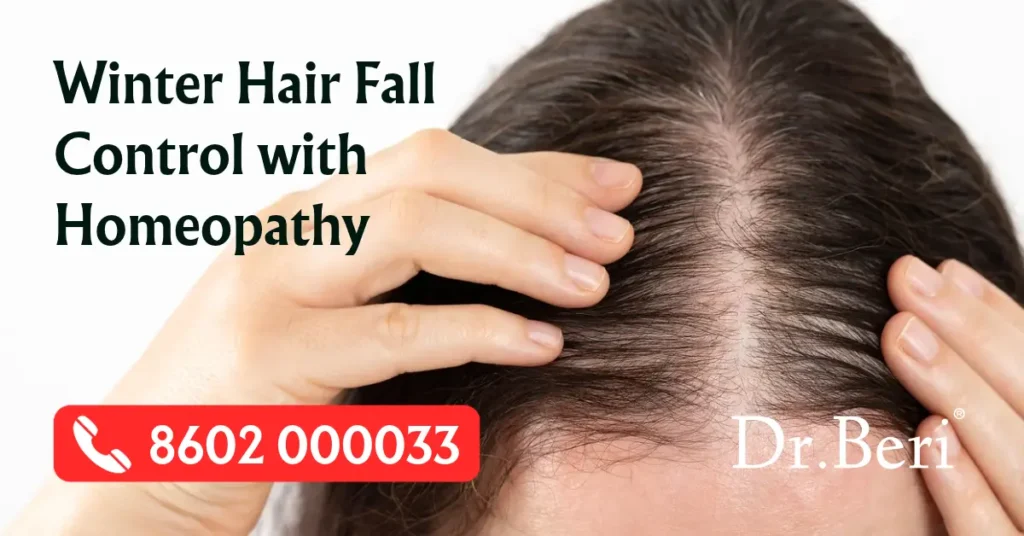
Every year, around wintertime, the first woolens come out of the cupboard, so do the complaints: “Doctor, my hair is falling like never before.” The hair comb fills up with hair, clumps of hair are found in the bathroom, and the pillow is another story. If this sounds familiar, you are not imagining things. Winter hair loss is not imaginary, is not uncommon and is something you can manage if you understand the reason behind it.
People often notice actual shedding. But in some cases, people notice that their hair becomes dry and frizzy and breaks at the roots. Knowing which type you are experiencing is important to know what you are dealing with.
Is Hair Loss in Winter Season?
For many people, it does, but winter is often not the whole story. Hair fall that shows up in winter can have its roots in the months before.
What Happens to Your Hair in Winter?
Hair grows in cycles. At any time, about 85% to 90% of your follicles are in the active growing phase, and the rest are resting or shedding. According to the American Academy of Dermatology, losing around 50 to 100 hairs a day is normal.
Sometimes a larger share of follicles moves into the resting phase early. Common triggers include illness, sudden changes in diet or weight, significant stress or disturbed sleep and, in some people, low vitamin D. Festive-season pressures, wedding schedules and year-end work deadlines can add to this. The result is a temporary condition called telogen effluvium, which, as the Cleveland Clinic explains, usually shows up as increased shedding two to three months after the trigger.
Cold air and a dry scalp add to the problem by making strands brittle, so you may notice breakage along with shedding from the root.
When Does Hair Fall Peak in North India?
Many people in North India notice the heaviest hair fall between September and November, and it often carries into early winter. Monsoon humidity, sweat and scalp fungus can weaken the roots, and the shedding shows up weeks later as the weather turns cold. Summer tends to bring an oily, sweaty scalp, while winter brings dryness, flaking and brittle hair. So if you see heavy fall in November or December, the cause may have started months earlier.
Normal Shedding, Excessive Hair Fall and Breakage
A few signs help you tell the difference:
- Normal shedding: up to around 100 strands a day on the comb, pillow or shower drain, with no visible thinning
- Excessive hair fall: clumps coming out while combing, a widening parting, a thinner ponytail, or heavy hair fall that continues for more than six to eight weeks. Shed hairs usually have a small white bulb at the root.
- Dryness-related breakage: short, snapped pieces with no bulb at the end, rough texture, split ends, and a dull, frizzy look. This is damage to the hair shaft, not loss from the root.
If the strands are breaking mid-length, you need moisture and gentler handling. If they are coming out from the root, the scalp and the body need attention.
Types of Hair Fall That Can Occur During Winter
Not all hair loss is the same, and treating every case as one problem is where many people go wrong.
- Hair shedding (telogen effluvium). A sudden, diffuse increase in hair fall after a trigger such as stress, illness, weight change or poor diet. It is usually temporary, and hair regrows once the trigger settles.
- Medical hair loss conditions. These include androgenetic alopecia (pattern hair loss), alopecia areata (round, smooth patches), scarring alopecia, and hair loss linked to thyroid problems, anaemia, or PCOS. These need proper evaluation and do not simply “pass with the season.”
- Dandruff-related hair fall. Heavy flaking and an itchy scalp, very common in winter. Frequent scratching can irritate the scalp, break hair and add to shedding.
Also Read: Homeopathy and Hair Loss: Natural Care for Alopecia
Common Causes of Hair Fall in Winter
- Dry air and a dry scalp: Cold outdoor air and heated indoor rooms strip moisture from the scalp. A dry scalp flakes, itches and weakens the grip around the hair root.
- Hot water: While a hot bath is nice in winter, very hot water deprives your scalp and hair of natural oils and causes them to become dry.
- Stress: Stress is a common but often overlooked trigger. It can push many follicles into the resting phase together, leading to sudden shedding.
- Lifestyle & diet: In winter, we tend to drink less water, get less sunlight and eat heavier, fried or sweet food. Low iron, protein, zinc, vitamin B12 and vitamin D can all affect hair growth.
- Scalp irritation: Dandruff, fungal infections, product build-up, and long hours under a woolen cap can irritate the scalp and trap sweat and oil.
- Hormonal changes: Thyroid imbalance, PCOS, pregnancy, the post-pregnancy period and menopause can affect hair growth at any time of year, so shedding that does not settle deserves a closer look.
- Static, friction and rough handling: Wool scarves, tight caps, vigorous towel-drying and combing wet hair all add mechanical stress to hair that is already dry.
How to Prevent Winter Hair Fall Naturally
Most people want to know the answer to the question – how to stop hair loss in winter? It is not simple, but certain habits make the trick.
- Lukewarm wash: If possible, the last rinse should be cold too. Wash your hair two to three times a week with a mild shampoo and lukewarm water, and avoid going for long stretches without washing.
- Gentle oiling: Give your hair a light massage with coconut, almond, or castor oil. It should be washed out after an hour or so.
- Dry gently. Pat your hair dry with a soft cotton cloth instead of rubbing. Avoid combing wet hair, and let it air-dry whenever possible.
- Eat for your hair. Include dal, eggs or paneer, sprouts, nuts, seeds, green leafy vegetables, seasonal fruit like amla and oranges, and enough water even when you do not feel thirsty.
- Protect from friction. Choose a soft cotton or silk lining under woolen caps, and avoid very tight ponytails and buns.
- Limit heat and chemicals. Cut down on straighteners, blow-dryers and colouring during the cold months.
- Sleep and manage stress. Seven to eight hours of sleep, daily movement, a few minutes of breathing practice, and time outdoors in winter sunlight all help.
- Treat dandruff early. Do not wait for it to settle on its own. An itchy, flaky scalp can steadily loosen hair.
If shedding continues for more than two months despite these steps, it is time to look deeper rather than keep trying new oils and serums.
Also read: Role of Homeopathy in Sleep Troubles: A Holistic Approach
What Is the Role of Homeopathy in Managing Hair Fall?
Homeopathy looks at hair fall as a sign of what is happening in the whole person, not just the scalp. Two people may both complain of hair fall, yet one has it after a stressful year, another after childbirth, a third with dandruff and an oily scalp, and a fourth with thyroid trouble. Their treatment will not be the same, and that is exactly where individualised homoeopathic care is strongest.
During a consultation, a homeopathic doctor looks at the pattern of hair fall, the condition of the scalp, appetite, digestion, sleep, emotional state, past illnesses, family history and hormonal factors. The prescription is built around the person. People often search for a “homeopathic medicine for hair fall” or “homeopathic medicine for hair growth and thickness” hoping for one name that fits everyone, but remedies such as Phosphorus, Natrum Muriaticum, Sepia, Lycopodium, Silicea or Calcarea Phosphorica are chosen only when the overall symptoms match, and only under a qualified physician’s guidance.
Homeopathy is commonly sought for:
- Diffuse hair fall linked to stress, grief or illness
- Hair fall with dandruff and scalp itching
- Postpartum and hormone-related hair fall
- Early thinning and patchy hair loss
- Slow regrowth after a long illness
Many patients come to us looking for a gentle, natural way to support their hair health. Our remedies are prepared from natural substances. Results vary from person to person, and consistency matters: hair grows slowly, so improvement is usually judged over a few months, not a few days. Alongside medicines, we advise on diet, scalp care and lifestyle, and where required we recommend relevant tests so that an underlying cause like thyroid imbalance or anaemia is not missed.
Why Choose Dr. Beri for a Hair Fall Consultation?
What patients can expect:
- A proper case history. We listen first. Your hair fall is understood in the context of your health, habits and stress, not treated as an isolated symptom.
- Individualised treatment. No copy-paste prescriptions. Your medicine, follow-up and lifestyle advice are matched to you.
- Honest guidance. If your hair fall needs investigations or another specialist’s input, we will tell you.
- Convenient access. Visit one of our five clinics in Amritsar (Mall Road and Bus Stand), Tarn Taran Sahib, Batala and Beas, or consult online from anywhere in India or worldwide.
Winter hair fall can feel alarming, but it is rarely the end of the story. With the right habits, a calmer routine and timely professional guidance, seasonal shedding is often temporary, and with the right habits and timely guidance, hair fall usually settles over time. Book a consultation with Dr. Beri’s Dynamic Homeopathy and let us look at the root cause together.
You can book an in-clinic visit or an online consultation at drberi.com/appointment, or call +91 8602 000033.

Consulting Homoeopathic Physician
Dr. Ranvir Beri is a third-generation homoeopathic physician and a graduate of Homoeopathic Medical College & Hospital, Chandigarh. He follows a classical, patient-centric homoeopathic approach focused on individualized case assessment and holistic healing.